Biomarker Correlation in Obesity and Insulin Resistance (Observational)
This trial analysed how metabolic dysfunction impacts baseline circulating MOTS-c levels in human adults.


The peptide encoded inside your mitochondria. A mitochondrial-derived peptide influencing glucose handling, insulin sensitivity, and metabolic flexibility through AMPK signalling. Research use only.
One of the most fascinating discoveries in modern metabolic research — a peptide that doesn’t come from your DNA at all, but from your mitochondria. MOTS-c is rewriting what researchers thought they knew about cellular energy regulation, and it sits at the intersection of two of the hottest fields in biology: metabolism and longevity.
MOTS-c is encoded inside the mitochondrial genome — not the cell's nucleus — making it part of a small and exciting class of mitochondrial-derived peptides. It signals between the mitochondria and the rest of the cell, activating AMPK pathways that govern glucose uptake, fatty acid metabolism, and overall energy balance. Researchers are particularly interested in its role as a candidate "exercise mimetic" — a molecule that produces some of the metabolic signatures of physical activity.
MOTS-c is at an active and fast-moving point in its research arc — most data is preclinical or from small human studies, but the field is expanding rapidly as mitochondrial-derived peptide research takes off.
Metabolic regulation: Improvements in insulin sensitivity and glucose tolerance in animal models, with relevance to metabolic syndrome and type 2 diabetes research.
Skeletal muscle: Cell Metabolism published research reporting enhanced muscle performance and exercise capacity linked to improved mitochondrial efficiency.
Body composition: Reductions in diet-induced weight gain and improved lipid handling in animal studies.
Ageing biology: Circulating MOTS-c levels decline with age, positioning it as a major research compound in longevity science.
Cognitive and sleep markers: Emerging research into effects on cognitive performance and sleep architecture.
This trial analysed how metabolic dysfunction impacts baseline circulating MOTS-c levels in human adults.
As Seen In The Press
Peptides can affect the way the body functions at a cellular level.

Pre-filled Cartridges
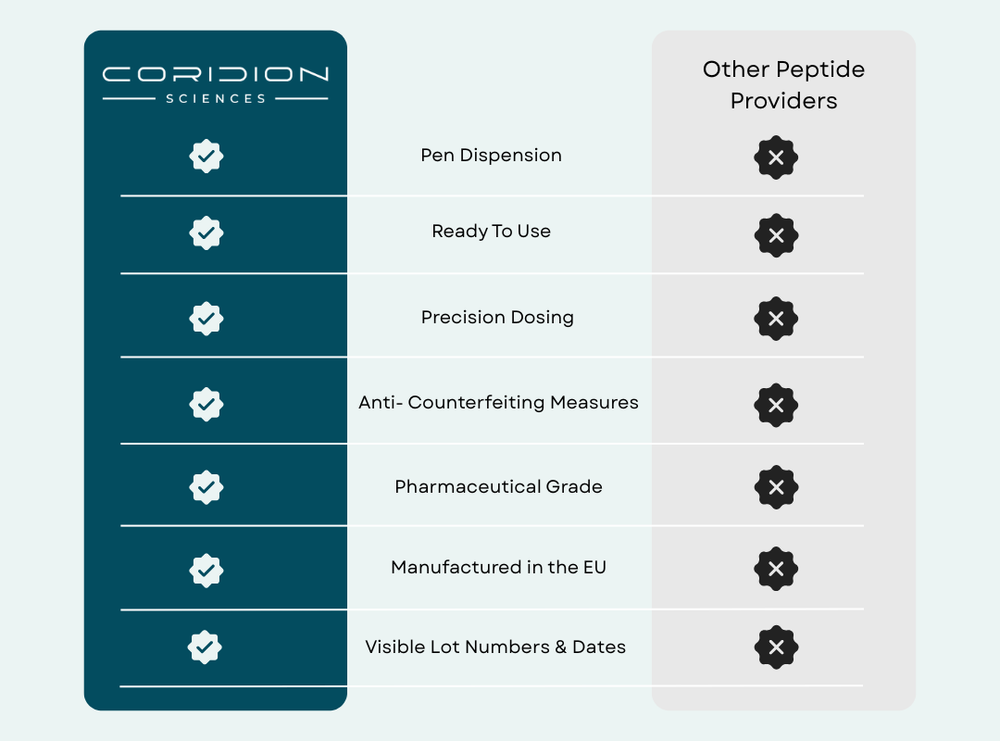
Engineered for absolute accuracy and ease. Our pre-blended pens make precise dosing completely seamless in just three quick steps.
Step 1 - Remove the Pre-mixed pen from the box
Step 2 - Secure the needle tip
Step 3 - Twist to set the required dose
Blends

The flagship triple combination of modern mitochondrial research. SS-31, MOTS-c, and NAD+ each act on a different layer of cellular energy biology — structure,. Research use only.
£159.99
Blends

The most famous tissue repair stack in research. BPC-157 brings angiogenesis and gastrointestinal protection; TB-500 brings cytoskeletal regulation and cell migration. Two of the. Research use only.
£102.99
Blends

The Wolverine stack, levelled up. Adding GHK-Cu — the most extensively studied dermal and tissue repair peptide on the market — brings extracellular matrix. Research use only.
£101.99